

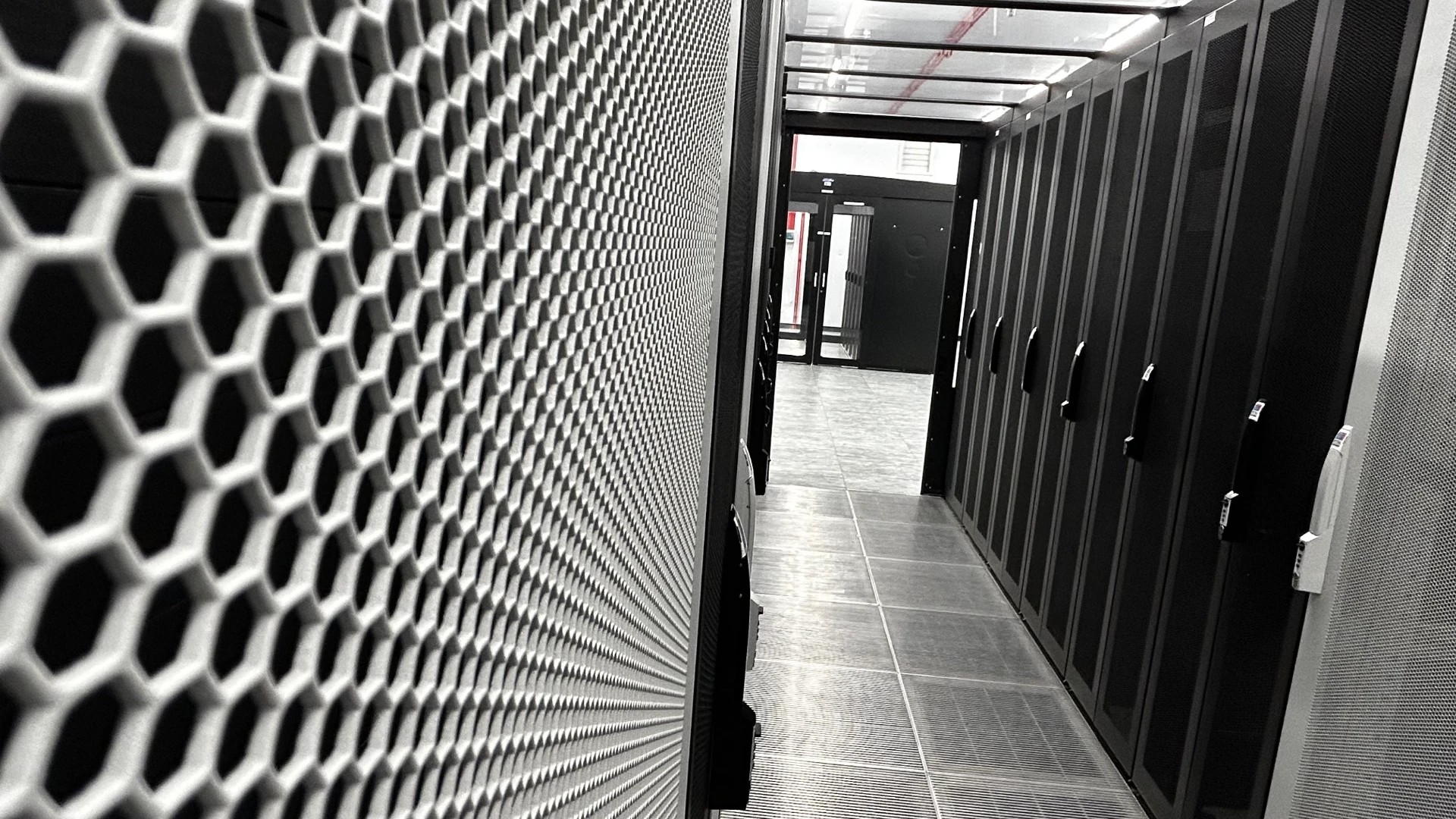
PUE, or power usage effectiveness, is the ratio of a data centre's total facility power to the power that reaches its IT equipment. A PUE of 1.2 means that for every 1kW your servers draw, the site uses another 0.2kW on cooling, power losses and other overheads. Lower is better, and on an illustrative 100kW load the gap between an average site and an efficient one can run to tens of thousands of pounds a year.
This guide explains what PUE is, how to calculate it, what counts as a good figure and how it feeds into a colocation quote. It also shows which questions to ask about metering, cooling overhead and energy charges before comparing providers.
Key takeaways
- PUE equals total facility power divided by IT load, so a perfect score is 1.0 and lower is better.
- On an illustrative 100kW IT load running all year, each 0.1 of PUE adds 87,600kWh of overhead energy.
- A PUE quoted without its load, measurement period, and method tells you little, so ask for all three.
- PUE reaches your bill directly through pass-through energy charges, or indirectly through an all-in price per kW.
PUE in a data centre: what it measures
PUE in a data centre measures how much of the incoming power reaches IT equipment, and how much goes on the infrastructure that supports it. It describes the building and its plant, not the work your servers do.
The two sides of the ratio are:
- IT load: the energy used by compute, storage and network equipment, plus supporting items such as KVM switches and control workstations.
- Total facility power: all of the IT load, plus power delivery (UPS systems, switchgear, generators), cooling (chillers, pumps, air handlers) and other loads such as lighting.
The Green Grid, the industry consortium that first published PUE in 2007, says in its white paper on the metric that operators should report the average measured over one year. PUE is also an international standard: ISO/IEC 30134-2 reached its second edition in January 2026, with updated measurement requirements and clearer rules on unmeasured energy.
How to calculate PUE
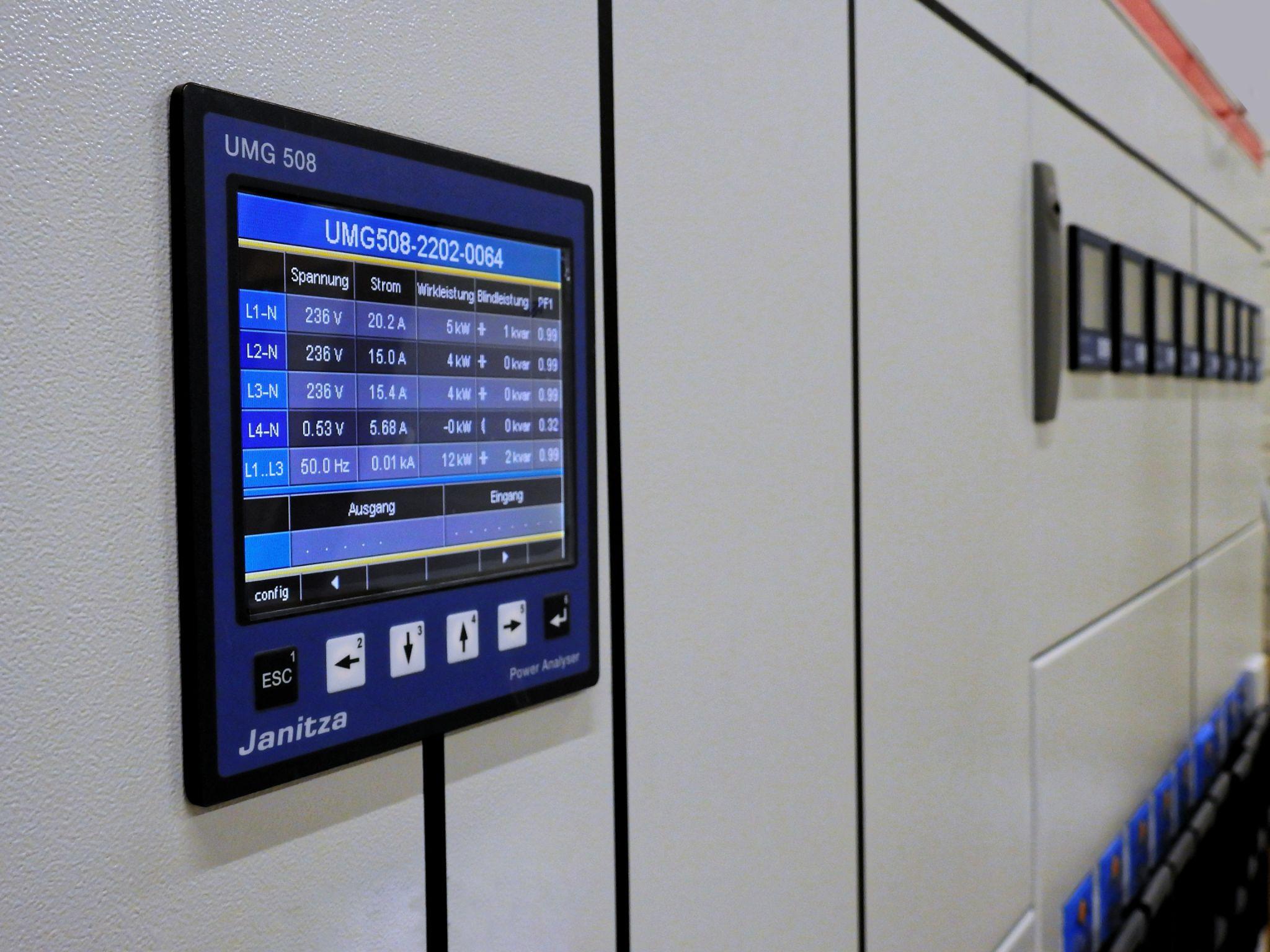
To calculate PUE, divide total facility energy by IT equipment energy over the same period. Using energy (kWh) over a year gives a truer figure than a one-off power reading, because cooling demand changes with the seasons and the IT load.
- Read total facility energy for the period from the utility meter, excluding any non-data-centre load in the building.
- Read IT equipment energy for the same period, from metering at a point such as the power distribution units.
- Divide the first figure by the second.
As an illustrative example, a site using 1,200,000kWh in a year with 1,000,000kWh reaching IT equipment has a PUE of 1.2.
Is a higher or lower PUE better?
A lower PUE is better because more of the power entering the site reaches IT equipment. A score of 1.0 would mean every kilowatt-hour goes to IT, with nothing spent on cooling or power losses. It is a theoretical floor, since real sites always have some overhead.
What is a good PUE value?
A useful starting benchmark is Uptime Institute's 2026 Global Data Center Survey, which reports an industry-wide annual average PUE of 1.52. This is not a pass mark for every data centre: climate, facility age, IT utilisation and cooling design affect the result. Ask for a measured annual figure and the load at which it was recorded.
Uptime Institute reports that newer facilities with efficient power and cooling systems commonly achieve PUEs of 1.3 or lower, while older sites contribute to the higher industry average. A lower PUE is generally preferable, but only where the measurements, operating conditions and suitability for the workload are comparable.
Density changes the target. A standard air-cooled rack and a GPU cluster in an immersion pod have different cooling needs, so compare sites that could actually host your workload.
DCiE: the same measure as a percentage
DCiE, or data centre infrastructure efficiency, is the inverse of PUE: IT energy divided by total facility energy, shown as a percentage. The table is simple arithmetic.
| PUE | DCiE | Overhead per 1kW of IT load |
|---|---|---|
| 1.04 | 96.2% | 0.04kW |
| 1.2 | 83.3% | 0.2kW |
| 1.3 | 76.9% | 0.3kW |
| 1.52 | 65.8% | 0.52kW |
| 2.0 | 50% | 1kW |
The Green Grid notes that PUE has overtaken DCiE in industry use, so PUE is the term you are more likely to see on a quote.
How does PUE affect my colocation power bill?
PUE affects your colocation power bill by setting how much overhead energy sits on top of your IT load. If a contract passes facility energy through, you pay that overhead directly. If you pay an all-in price per kW, the provider has built its overhead into the rate, so PUE is still there but harder to see.
Energy cost per kW at different PUE values
Energy cost per kW rises in step with PUE. This illustrative table assumes a constant 100kW IT load for 8,760 hours and the UK average non-domestic electricity price of 24.51p per kWh including Climate Change Levy for April to June 2026 (excluding VAT). This is a UK-wide, fully delivered average rather than a colocation tariff, so your actual rate will differ.
| PUE (illustrative) | Total energy a year | Energy cost a year | Of which overhead | Energy cost per kW of IT load a year |
|---|---|---|---|---|
| 1.52 | 1,331,520kWh | £326,356 | £111,648 | £3,264 |
| 1.3 | 1,138,800kWh | £279,120 | £64,412 | £2,791 |
| 1.2 | 1,051,200kWh | £257,649 | £42,942 | £2,576 |
| 1.04 | 911,040kWh | £223,296 | £8,588 | £2,233 |
In this illustration, moving from a PUE of 1.52 to 1.2 saves about £68,700 a year, and each 0.1 of PUE is worth about £21,500. It is arithmetic rather than a quote: actual savings depend on your contract, your electricity rate and how close you run to full load.
To explore how these assumptions relate to your deployment, our power assessment provides a starting point for discussing IT load, cooling requirements and colocation costs.
Questions to ask when comparing colocation quotes
Comparing colocation quotes on PUE needs the context behind the number. Ask each provider:
- Is it measured or designed? A design PUE is a target, and a measured annual figure shows what the site really does.
- At what load? The Green Grid notes that PUE is likely to vary with IT load, so a part-filled hall may score differently from a full one.
- Which method? Ask where the IT load is metered and whether the figure follows ISO/IEC 30134-2.
- How is energy charged? Find out whether energy is passed through or bundled, and whether an uplift is applied to your metered use.
- Contracted or drawn? Paying for contracted kilowatts means unused headroom still costs money.
- What happens when energy prices move? Check whether a fixed rate has a review date.
We price high-density colocation on a power-based model rather than per rack, and these questions apply to our quotes as much as anyone's.
Why a low PUE does not tell the whole story
A low PUE shows efficient infrastructure, but it does not show efficient computing. The Green Grid says plainly that PUE is not a productivity metric, and it discourages using PUE to compare different data centres without proper research and analysis.
Two effects can mislead buyers. Reducing the IT load through consolidation can make PUE look worse when the fixed overhead stays the same, even though total energy use falls. And PUE says nothing about where the electricity comes from or how much water the cooling uses, so it is not a carbon or sustainability score.
Ways to lower PUE in a data centre
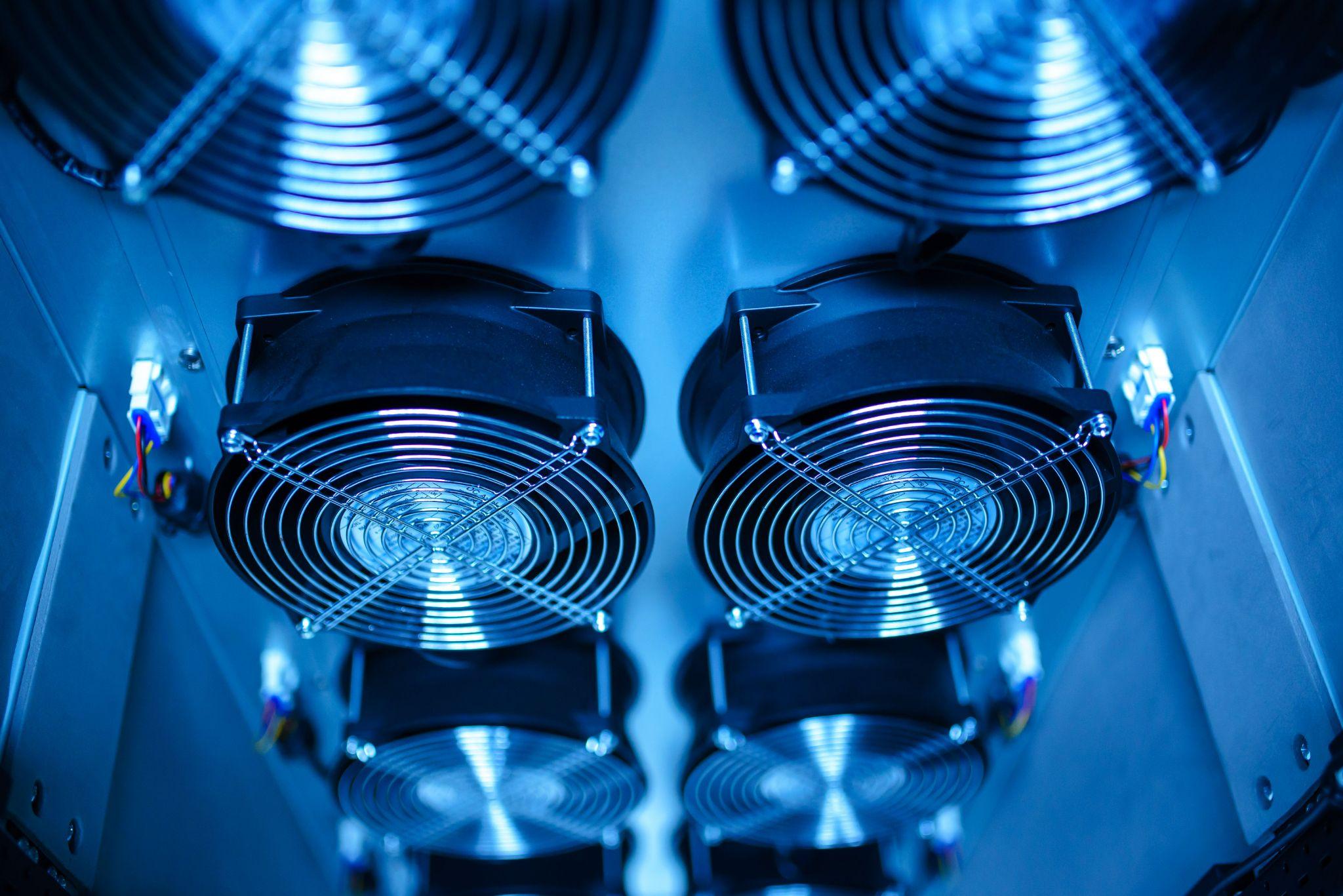
Data centres lower PUE by cutting the overhead energy around the IT load, most visibly in cooling. The other routes are more efficient power delivery and running closer to the load the plant was designed for.
Free cooling
Free cooling uses cool outside air or water to reject heat, reducing the time chillers and compressors need to run. It is not literally free, as fans and pumps still use power. Its benefit depends on the local climate and the temperatures the IT equipment can accept, which is one reason PUE varies by region.
How does liquid cooling lower PUE?
Liquid cooling can lower PUE by removing heat closer to the source, because liquid absorbs and carries heat more effectively than air. This can reduce the need to move large volumes of chilled air around a hall. Direct-to-chip cooling fits cold plates directly onto CPUs and GPUs, and our guide to air versus liquid cooling sets out when each makes sense.
Immersion cooling
Immersion cooling submerges hardware in a dielectric fluid, which absorbs heat directly from the components with no reliance on fan-driven airflow. A 2023 paper in Energy Informatics reports immersion PUE figures of about 1.02 to 1.04, with a highest reported value of 1.17, and cites an estimate that avoiding internal fans cuts IT energy by 5% to 10%.
That second point is easy to miss. Server fans sit on the IT side of the ratio, so removing them shrinks the bill in a way PUE alone does not show. We offer immersion cooling as a colocation service for suitable high-density workloads.
Frequently asked questions
What does a PUE of 1.2 mean?
A PUE of 1.2 means a data centre uses 1.2kW in total for every 1kW reaching IT equipment. The extra 0.2kW goes on cooling, power losses and other loads. Put another way, about 83% of the energy reaches IT equipment, and about 17% is overhead.
What does a PUE of 1.3 mean?
A PUE of 1.3 means a data centre uses 0.3kW of overhead for every 1kW of IT load. About 77% of the site's energy reaches IT equipment, and about 23% goes on overheads such as cooling and power delivery. Check that the figure is an annual average, not a best-day reading.
Can a PUE be lower than 1.0?
A PUE cannot be lower than 1.0 under the standard ratio, because total facility power includes the IT load, so the top of the fraction can never be smaller than the bottom. Treat any claim below 1.0 with caution and ask how it was calculated.
Does a colocation customer need to know the site's PUE?
A colocation customer should know the site's PUE, because it shapes the energy cost behind the price, even in an all-in rate. It is most useful for high-density or long-term deployments, where the overhead adds up over time. Ask for the annual measured figure and how it feeds into your charges.
Using PUE to choose a colocation provider
Knowing what PUE is gives you a way to test a colocation quote: find the annual measured figure, the load behind it and how that overhead reaches your bill. A lower score is only worth paying for if your contract lets you benefit from it.
To explore the power requirements of your deployment, request a power assessment. Our team can discuss suitable cooling options and the information needed to compare costs. If you are new to colocation, start with what a colocation data centre is.



%20--%3e%3csvg%20version='1.1'%20id='Layer_1'%20xmlns='http://www.w3.org/2000/svg'%20xmlns:xlink='http://www.w3.org/1999/xlink'%20x='0px'%20y='0px'%20viewBox='0%200%20388.2%20150.6'%20style='enable-background:new%200%200%20388.2%20150.6;'%20xml:space='preserve'%3e%3cstyle%20type='text/css'%3e%20.st0{fill:%2304C7FD;}%20.st1{fill:%230068B5;}%20%3c/style%3e%3crect%20y='2.1'%20class='st0'%20width='28.1'%20height='28.1'/%3e%3cpath%20class='st1'%20d='M27.4,148.5V47.3H0.8v101.2H27.4z%20M204.2,149.5v-24.8c-3.9,0-7.2-0.2-9.6-0.6c-2.8-0.4-4.9-1.4-6.3-2.8%20c-1.4-1.4-2.3-3.4-2.8-6c-0.4-2.5-0.6-5.8-0.6-9.8V70.1h19.3V47.3h-19.3V7.8h-26.7v97.9c0,8.3,0.7,15.3,2.1,20.9%20c1.4,5.5,3.8,10,7.1,13.4s7.7,5.8,13,7.3c5.4,1.5,12.2,2.2,20.3,2.2L204.2,149.5L204.2,149.5z%20M357,148.5V0h-26.7v148.5H357z%20M132.5,57.2c-7.4-8-17.8-12-31-12c-6.4,0-12.2,1.3-17.5,3.9c-5.2,2.6-9.7,6.2-13.2,10.8l-1.5,1.9v-1.7V47.3H43v101.2h26.5V94.6v3.7%20c0-0.6,0-1.2,0-1.8c0.3-9.5,2.6-16.5,7-21c4.7-4.8,10.4-7.2,16.9-7.2c7.7,0,13.6,2.4,17.5,7c3.8,4.6,5.8,11.1,5.8,19.4l0,0v0.2l0,0%20l0,0v53.5h26.9V91C143.7,76.6,139.9,65.2,132.5,57.2z%20M316.5,97.7c0-7.3-1.3-14.1-3.8-20.5c-2.6-6.3-6.2-11.9-10.7-16.7%20c-4.6-4.8-10.1-8.5-16.5-11.2s-13.5-4-21.2-4c-7.3,0-14.2,1.4-20.6,4.1c-6.4,2.8-12,6.5-16.7,11.2s-8.5,10.3-11.2,16.7%20c-2.8,6.4-4.1,13.3-4.1,20.6c0,7.3,1.3,14.2,3.9,20.6c2.6,6.4,6.3,12,10.9,16.7c4.6,4.7,10.3,8.5,16.9,11.2%20c6.6,2.8,13.9,4.2,21.7,4.2c22.6,0,36.6-10.3,45-19.9l-19.2-14.6c-4,4.8-13.6,11.3-25.6,11.3c-7.5,0-13.7-1.7-18.4-5.2%20c-4.7-3.4-7.9-8.2-9.6-14.1l-0.3-0.9h79.5L316.5,97.7L316.5,97.7z%20M237.2,88.4c0-7.4,8.5-20.3,26.8-20.4c18.3,0,26.9,12.9,26.9,20.3%20L237.2,88.4z'/%3e%3cpath%20class='st1'%20d='M387.4,135.3c-0.5-1.2-1.2-2.2-2.1-3.1c-0.9-0.9-1.9-1.6-3.1-2.1s-2.5-0.8-3.8-0.8c-1.4,0-2.6,0.3-3.8,0.8%20c-1.2,0.5-2.2,1.2-3.1,2.1c-0.9,0.9-1.6,1.9-2.1,3.1c-0.5,1.2-0.8,2.5-0.8,3.8c0,1.4,0.3,2.6,0.8,3.8s1.2,2.2,2.1,3.1%20c0.9,0.9,1.9,1.6,3.1,2.1s2.5,0.8,3.8,0.8c1.4,0,2.6-0.3,3.8-0.8c1.2-0.5,2.2-1.2,3.1-2.1c0.9-0.9,1.6-1.9,2.1-3.1%20c0.5-1.2,0.8-2.5,0.8-3.8S387.9,136.5,387.4,135.3z%20M385.8,142.3c-0.4,1-1,1.9-1.7,2.6c-0.7,0.7-1.6,1.3-2.6,1.7s-2,0.6-3.2,0.6%20c-1.1,0-2.2-0.2-3.2-0.6c-1-0.4-1.9-1-2.6-1.7s-1.3-1.6-1.7-2.6c-0.4-1-0.6-2-0.6-3.2c0-1.1,0.2-2.2,0.6-3.2s1-1.9,1.7-2.6%20c0.7-0.7,1.6-1.3,2.6-1.7s2-0.6,3.2-0.6c1.1,0,2.2,0.2,3.2,0.6c1,0.4,1.9,1,2.6,1.7s1.3,1.6,1.7,2.6c0.4,1,0.6,2,0.6,3.2%20C386.5,140.3,386.2,141.3,385.8,142.3z%20M380.2,139.9c0.8-0.1,1.4-0.4,1.9-0.9s0.8-1.2,0.8-2.2c0-1.1-0.3-1.9-1-2.5%20c-0.6-0.6-1.7-0.9-3-0.9h-4.4v11.3h2.1v-4.6h1.5l2.8,4.6h2.2L380.2,139.9z%20M379.1,138.3c-0.3,0-0.6,0-1,0h-1.5v-3.2h1.5%20c0.3,0,0.6,0,1,0c0.3,0,0.6,0.1,0.9,0.2c0.3,0.1,0.5,0.3,0.6,0.5s0.2,0.5,0.2,0.9s-0.1,0.7-0.2,0.9c-0.2,0.2-0.4,0.4-0.6,0.5%20C379.7,138.2,379.4,138.3,379.1,138.3z'/%3e%3c/svg%3e)