

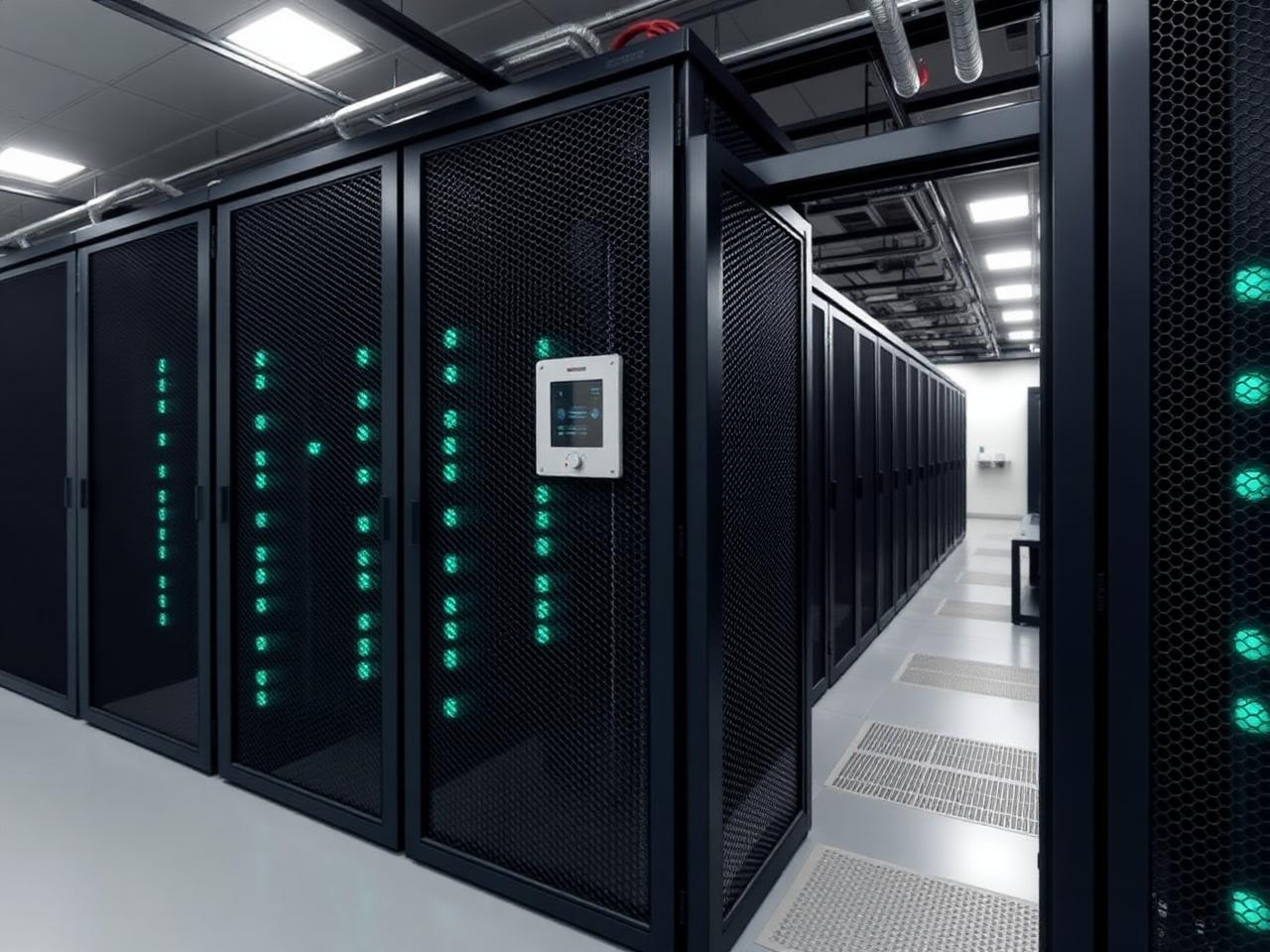
A 120kW rack is not a normal cabinet with a bigger power number attached. It is a different class of infrastructure.
At this level, power, cooling and cabling need to be designed together, or the rack becomes difficult to operate. The rack needs enough electrical capacity, enough heat removal, enough physical access and enough monitoring to run safely under sustained load.
For high-density deployments, we treat power, cooling, cabling, monitoring and service access as one design problem. The question is not simply whether the hardware fits in the rack. The better question is whether the specification accounts for power, cooling, connectivity, monitoring and service access once the rack is live.
This guide explains what 120kW per rack means in practical terms, and what buyers should check before signing off on a high-density deployment.
120kW Per Rack In Plain English
A rack drawing 120kW of IT power will produce almost the same amount of heat. That is the part buyers cannot afford to gloss over.
This is not a standard enterprise rack. It is usually associated with GPU clusters, AI training, inference, HPC, rendering, simulation, or other accelerated compute environments.
NVIDIA's official hardware guide for its DGX GB200 rack-scale system states that rack power consumption is approximately 120kW. That gives buyers a useful real-world reference point: 120kW is not a theoretical number; it is now part of modern accelerated computing infrastructure.
The key takeaway is simple: if you cannot remove the heat reliably, you cannot use the power safely.
What The Power Specification Needs To Cover
A 120kW rack cannot be treated like a conventional cabinet with larger PDUs. It needs a designed power path from upstream capacity through switchgear, UPS, distribution and rack-level delivery.
As a rough engineering sense-check, 120kW at 400V three-phase is around 173A at unity power factor before allowances. Real designs must account for redundancy, derating, power factor, cable sizing, protection, load balancing and local electrical requirements.
That calculation is not a design. It is a warning label with maths attached.
A high-density rack specification should be reviewed before ordering hardware. If you are unsure what your current environment can realistically support, a data centre power assessment is a sensible first step before committing to high-density hardware or migration planning.
What The Cooling Specification Needs To Cover
At 120kW per rack, air cooling alone may become difficult to scale, depending on the hardware, room design and operating conditions. The issue is not just whether cold air can be supplied. It is whether enough heat can be removed from a concentrated footprint without creating noise, space, efficiency or reliability problems.
Liquid cooling often becomes part of the design because it moves heat away from the hottest components more directly. The right cooling method depends on the hardware, rack layout, operating model and maintenance process.
The Open Compute Project's Cooling Environments work covers cold plates, coolant distribution units, immersion, door heat exchangers and heat reuse. That matters because high-density cooling rarely comes down to one component. It is a system design.
The cooling design should also cover coolant distribution units, pipe routes, leak detection, temperature monitoring, flow rate monitoring, service access and failure response. Cooling capacity is only useful if engineers can still inspect, isolate and service the system safely.
What The Cabling Specification Needs To Cover
At 120kW, cabling is not just a neatness issue. It affects airflow, serviceability, safety and fault response.
There are three physical routes to manage:
Power cabling
Data and management cabling
Cooling hoses, manifolds and pipework
If these routes are not planned together, the rack can become difficult to work on. That matters when an engineer needs to isolate a feed, trace a fibre, check a manifold or replace equipment without disturbing the rest of the deployment.
A high-density rack design should allow for:
Clear separation between power, data and coolant routes
Correct bend radius for fibre and cooling hoses
Labelled connections for operational use
Access to manifolds, valves and sensors
Sensible service loops where movement is required
Top or bottom cable entry based on the facility design
No blocked doors, panels or exhaust paths
Space for monitoring and leak detection equipment
A documented route for future expansion
Dense racks need cabling routes planned alongside power and coolant paths. Fibre, management links, power feeds and cooling hoses all need clear separation, sensible bend radius and enough service access for engineers to work safely.
Why Specifications Need To Be Standardised
As rack densities rise, buyers need clearer specifications, not just bigger power numbers.
The Lawrence Berkeley National Laboratory page on the development of a liquid-cooled rack specification highlights the need for specifications, standards and reference designs that support wider adoption of liquid cooling for data centre equipment.
That matters because a 120kW rack has too many dependencies to be handled informally. Power, cooling, pipework, cabling, monitoring and service access all need to be described clearly enough for engineering, procurement and operations teams to work from the same plan.
A useful specification should explain:
Expected IT load
Peak and sustained power draw
Cooling method
Coolant supply and return requirements
Rack layout
Cable and hose routes
Monitoring points
Redundancy model
Maintenance access
Failure response
A specification that only says "120kW rack" is not enough. It tells you the destination, not how the system will get there safely.
Monitoring And Operational Visibility
A 120kW rack needs more than basic temperature checks. Buyers should expect visibility across power, cooling and environmental conditions.
Useful monitoring points may include:
Rack power draw
Feed balance
CDU status
Coolant temperature
Coolant flow rate
Leak detection
Rack inlet and outlet temperatures
Hardware telemetry
Network status
Door or access events
The goal is not more dashboards. It is an earlier warning and a faster response.
For high-density infrastructure, monitoring should be designed into the deployment from the start. Retrofitting visibility later is usually messier, slower and more expensive.
What Buyers Should Ask Before Signing Off
A 120kW rack specification should be questioned before it is approved. That is not pessimism. That is sensible engineering.
Ask:
What confirmed hardware will run in the rack?
What is the expected peak and sustained power draw?
What redundancy model is required?
How will heat be removed at full load?
What cooling method is supported by the hardware?
How are cables, hoses and manifolds routed?
Can engineers access all service points safely?
What happens if a feed, pump, CDU or network path fails?
What will be monitored, and who responds to alerts?
Can the design support the next hardware refresh?
If the answer to any of these is vague, the specification is not ready. "We will work that out later" is how late-stage redesigns and avoidable costs appear.
High-Density Colocation For 120kW Rack Loads
A 120kW rack should be treated as a complete operating environment, not as a cabinet with a larger power number attached to it. The buying decision needs to account for power availability, cooling design, cable routing, monitoring and safe service access as one combined system.
Carbon-Z's high-density colocation service supports sustained rack densities from 20kW to 120kW, with density planning considered from initial assessment through to deployment.
For buyers assessing this level of load, the value is in checking the full path before anything is locked in: power in, heat out, cables managed, alerts monitored and engineers able to work safely around the rack.
Final Word
A 120kW rack is a serious engineering commitment. It affects electrical design, cooling architecture, cable routing, monitoring, access and long-term hardware planning.
The safest route is to start with the workload, confirm the power profile, choose the cooling method, plan the physical layout and then test whether the operational model can support it. Miss one of those steps and the rack may become difficult to run, even if it looks impressive on paper.
Planning a 120kW rack is not the time for assumptions. If you need to sanity-check the power, cooling and cabling requirements before procurement, speak to Carbon-Z about pressure-testing the specification before the build gets locked in.



%20--%3e%3csvg%20version='1.1'%20id='Layer_1'%20xmlns='http://www.w3.org/2000/svg'%20xmlns:xlink='http://www.w3.org/1999/xlink'%20x='0px'%20y='0px'%20viewBox='0%200%20388.2%20150.6'%20style='enable-background:new%200%200%20388.2%20150.6;'%20xml:space='preserve'%3e%3cstyle%20type='text/css'%3e%20.st0{fill:%2304C7FD;}%20.st1{fill:%230068B5;}%20%3c/style%3e%3crect%20y='2.1'%20class='st0'%20width='28.1'%20height='28.1'/%3e%3cpath%20class='st1'%20d='M27.4,148.5V47.3H0.8v101.2H27.4z%20M204.2,149.5v-24.8c-3.9,0-7.2-0.2-9.6-0.6c-2.8-0.4-4.9-1.4-6.3-2.8%20c-1.4-1.4-2.3-3.4-2.8-6c-0.4-2.5-0.6-5.8-0.6-9.8V70.1h19.3V47.3h-19.3V7.8h-26.7v97.9c0,8.3,0.7,15.3,2.1,20.9%20c1.4,5.5,3.8,10,7.1,13.4s7.7,5.8,13,7.3c5.4,1.5,12.2,2.2,20.3,2.2L204.2,149.5L204.2,149.5z%20M357,148.5V0h-26.7v148.5H357z%20M132.5,57.2c-7.4-8-17.8-12-31-12c-6.4,0-12.2,1.3-17.5,3.9c-5.2,2.6-9.7,6.2-13.2,10.8l-1.5,1.9v-1.7V47.3H43v101.2h26.5V94.6v3.7%20c0-0.6,0-1.2,0-1.8c0.3-9.5,2.6-16.5,7-21c4.7-4.8,10.4-7.2,16.9-7.2c7.7,0,13.6,2.4,17.5,7c3.8,4.6,5.8,11.1,5.8,19.4l0,0v0.2l0,0%20l0,0v53.5h26.9V91C143.7,76.6,139.9,65.2,132.5,57.2z%20M316.5,97.7c0-7.3-1.3-14.1-3.8-20.5c-2.6-6.3-6.2-11.9-10.7-16.7%20c-4.6-4.8-10.1-8.5-16.5-11.2s-13.5-4-21.2-4c-7.3,0-14.2,1.4-20.6,4.1c-6.4,2.8-12,6.5-16.7,11.2s-8.5,10.3-11.2,16.7%20c-2.8,6.4-4.1,13.3-4.1,20.6c0,7.3,1.3,14.2,3.9,20.6c2.6,6.4,6.3,12,10.9,16.7c4.6,4.7,10.3,8.5,16.9,11.2%20c6.6,2.8,13.9,4.2,21.7,4.2c22.6,0,36.6-10.3,45-19.9l-19.2-14.6c-4,4.8-13.6,11.3-25.6,11.3c-7.5,0-13.7-1.7-18.4-5.2%20c-4.7-3.4-7.9-8.2-9.6-14.1l-0.3-0.9h79.5L316.5,97.7L316.5,97.7z%20M237.2,88.4c0-7.4,8.5-20.3,26.8-20.4c18.3,0,26.9,12.9,26.9,20.3%20L237.2,88.4z'/%3e%3cpath%20class='st1'%20d='M387.4,135.3c-0.5-1.2-1.2-2.2-2.1-3.1c-0.9-0.9-1.9-1.6-3.1-2.1s-2.5-0.8-3.8-0.8c-1.4,0-2.6,0.3-3.8,0.8%20c-1.2,0.5-2.2,1.2-3.1,2.1c-0.9,0.9-1.6,1.9-2.1,3.1c-0.5,1.2-0.8,2.5-0.8,3.8c0,1.4,0.3,2.6,0.8,3.8s1.2,2.2,2.1,3.1%20c0.9,0.9,1.9,1.6,3.1,2.1s2.5,0.8,3.8,0.8c1.4,0,2.6-0.3,3.8-0.8c1.2-0.5,2.2-1.2,3.1-2.1c0.9-0.9,1.6-1.9,2.1-3.1%20c0.5-1.2,0.8-2.5,0.8-3.8S387.9,136.5,387.4,135.3z%20M385.8,142.3c-0.4,1-1,1.9-1.7,2.6c-0.7,0.7-1.6,1.3-2.6,1.7s-2,0.6-3.2,0.6%20c-1.1,0-2.2-0.2-3.2-0.6c-1-0.4-1.9-1-2.6-1.7s-1.3-1.6-1.7-2.6c-0.4-1-0.6-2-0.6-3.2c0-1.1,0.2-2.2,0.6-3.2s1-1.9,1.7-2.6%20c0.7-0.7,1.6-1.3,2.6-1.7s2-0.6,3.2-0.6c1.1,0,2.2,0.2,3.2,0.6c1,0.4,1.9,1,2.6,1.7s1.3,1.6,1.7,2.6c0.4,1,0.6,2,0.6,3.2%20C386.5,140.3,386.2,141.3,385.8,142.3z%20M380.2,139.9c0.8-0.1,1.4-0.4,1.9-0.9s0.8-1.2,0.8-2.2c0-1.1-0.3-1.9-1-2.5%20c-0.6-0.6-1.7-0.9-3-0.9h-4.4v11.3h2.1v-4.6h1.5l2.8,4.6h2.2L380.2,139.9z%20M379.1,138.3c-0.3,0-0.6,0-1,0h-1.5v-3.2h1.5%20c0.3,0,0.6,0,1,0c0.3,0,0.6,0.1,0.9,0.2c0.3,0.1,0.5,0.3,0.6,0.5s0.2,0.5,0.2,0.9s-0.1,0.7-0.2,0.9c-0.2,0.2-0.4,0.4-0.6,0.5%20C379.7,138.2,379.4,138.3,379.1,138.3z'/%3e%3c/svg%3e)