

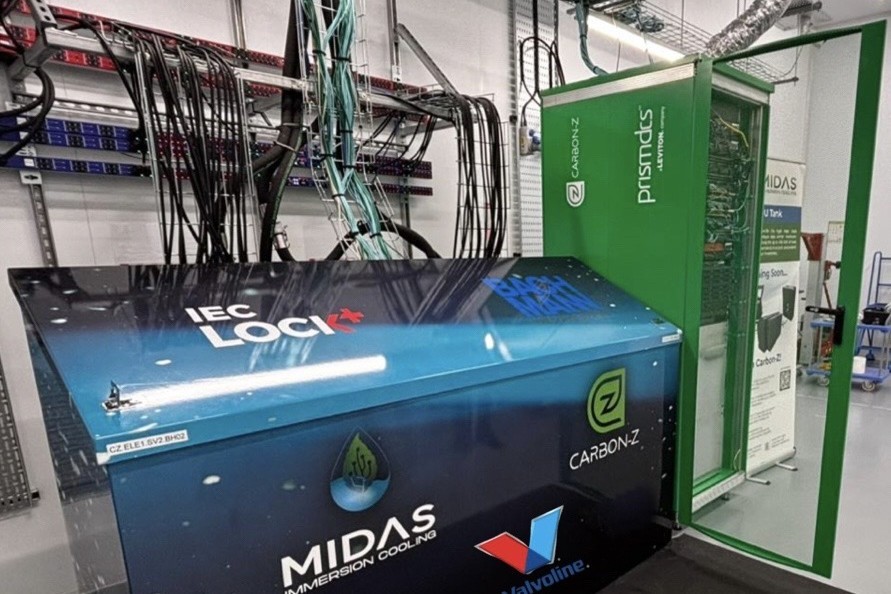
There is no useful single figure for immersion cooling cost.
A small deployment inside an existing facility has a very different cost profile from a multi-megawatt AI environment designed around liquid cooling from day one. Costs also vary according to hardware density, dielectric fluid, heat rejection, resilience requirements, and whether you build the infrastructure yourself or use an immersion-ready colocation provider.
That distinction matters. Looking only at the price of an immersion tank can make the technology appear expensive. Looking at the wider facility, including cooling plant, electricity, floor space and long-term operation, can produce a very different result.
At Carbon-Z, we assess cooling requirements around the workload itself, including rack density, power draw and the infrastructure needed to support it. The more useful cost question is therefore not simply, "How much does an immersion tank cost?" It is, "What will this infrastructure cost to deliver the compute you actually need over its working life?"
What does immersion cooling cost include?
For an organisation building its own environment, immersion cooling costs normally fall into three groups:
Capital expenditure, or CapEx , covering equipment, installation and facility changes.
Operating expenditure, or OpEx , covering electricity, maintenance, fluid management and ongoing support.
Total cost of ownership, or TCO , bringing those costs together over the expected operating life.
Looking at any one of those figures in isolation gives you an incomplete cost picture.
This is particularly important with liquid cooling because the initial system introduces specialist infrastructure while potentially reducing the need for other equipment.
The IEA 4E review of liquid cooling in data centres identifies upfront costs as one of the considerations affecting adoption, alongside reliability, standardisation, retrofit requirements and maintenance.
For that reason, the upfront purchase price is only one part of the calculation.
If you are still comparing the underlying approaches, our guide to air cooling versus liquid cooling explains how the main cooling technologies differ.
What makes up immersion cooling CapEx?
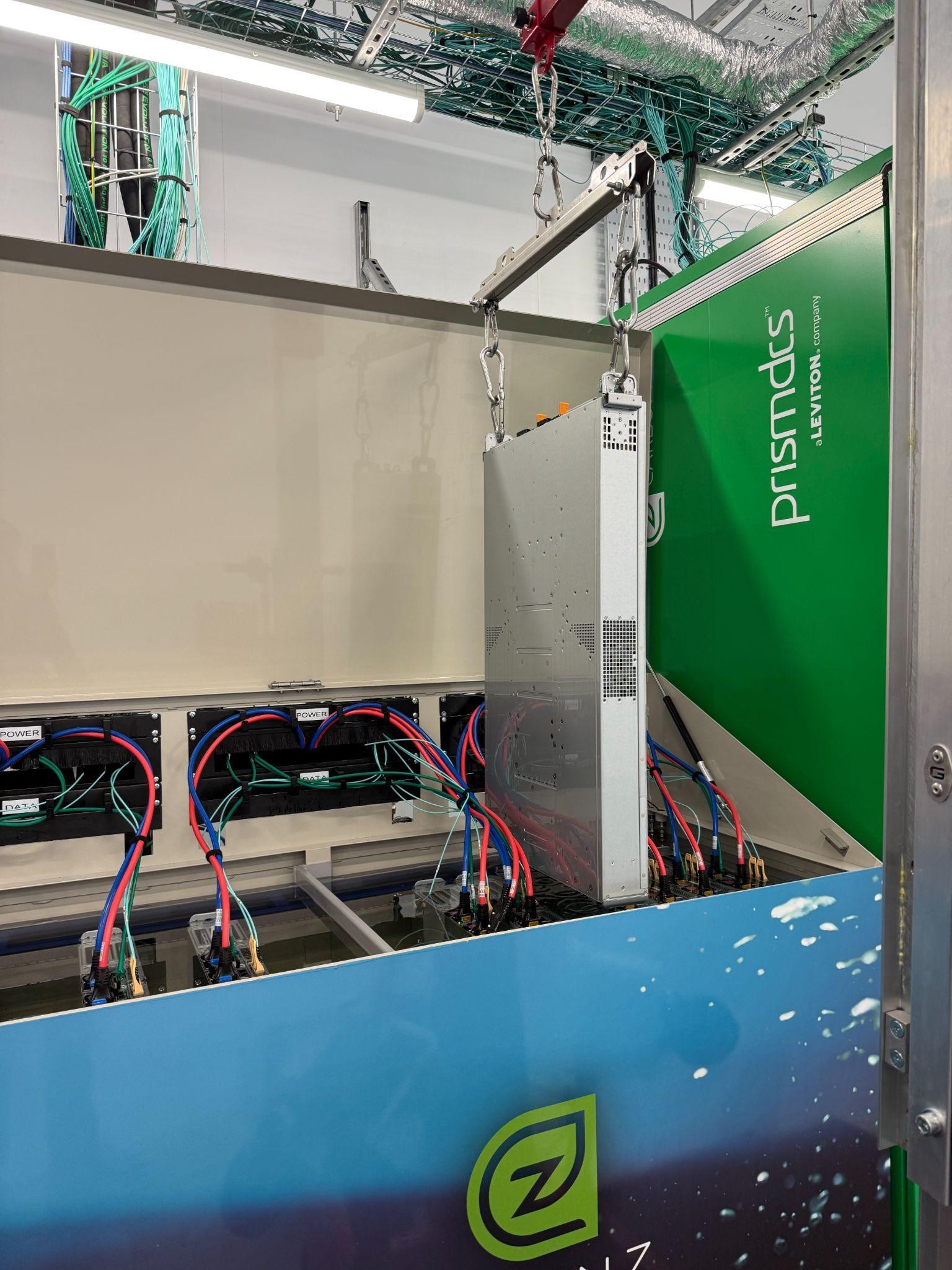
The tank itself is only one part of the initial investment.
Comparing an immersion tank with a conventional rack on a one-for-one basis can be misleading.
If immersion allows you to place substantially more compute into a smaller technical footprint, you may require fewer racks, less data hall space, and less conventional airflow infrastructure.
That becomes particularly relevant with GPU-heavy environments. Our guide to why AI and HPC workloads need immersion cooling looks at why sustained high-power computing changes the cooling requirement.
From a financial perspective, compare the infrastructure required to support the same compute workload , not the same number of racks.
Otherwise, you risk comparing systems that deliver very different amounts of usable computing capacity.
What does immersion cooling cost to operate?
Once the system is operating, electricity consumption and tariff assumptions can materially affect the TCO.
OpEx should account for:
cooling and pumping energy
electricity consumed by the IT equipment
dielectric fluid monitoring and management
routine maintenance
engineering labour
replacement pumps, seals and other serviceable components
external heat-rejection equipment
planned hardware changes and servicing
any water requirements associated with the wider cooling design
Immersion cooling removes much of the dependence on server fans and large-scale airflow management, but supporting infrastructure still consumes energy.
It is therefore better to model the entire facility rather than assume liquid cooling has virtually no cooling overhead.
The Uptime Institute's 2025 data centre cooling research found that higher rack density remained a leading driver for direct liquid-cooling adoption. Operating cost, retrofit practicality and maintenance requirements were also among the factors affecting commercial viability.
Power Usage Effectiveness, or PUE, can help translate infrastructure efficiency into a financial comparison.
Imagine a data centre carrying a continuous 1 MW IT load.
If one design achieves a PUE that is 0.10 lower than another, the difference equates to approximately 100 kW of facility power at that IT load.
Across a full year:
100 kW × 8,760 hours = 876,000 kWh
You can then multiply that figure by the electricity price you actually pay.
This is more useful than quoting a generic percentage saving because your tariff, utilisation and measured facility performance determine what an efficiency improvement is genuinely worth.
What should be included in immersion cooling TCO?
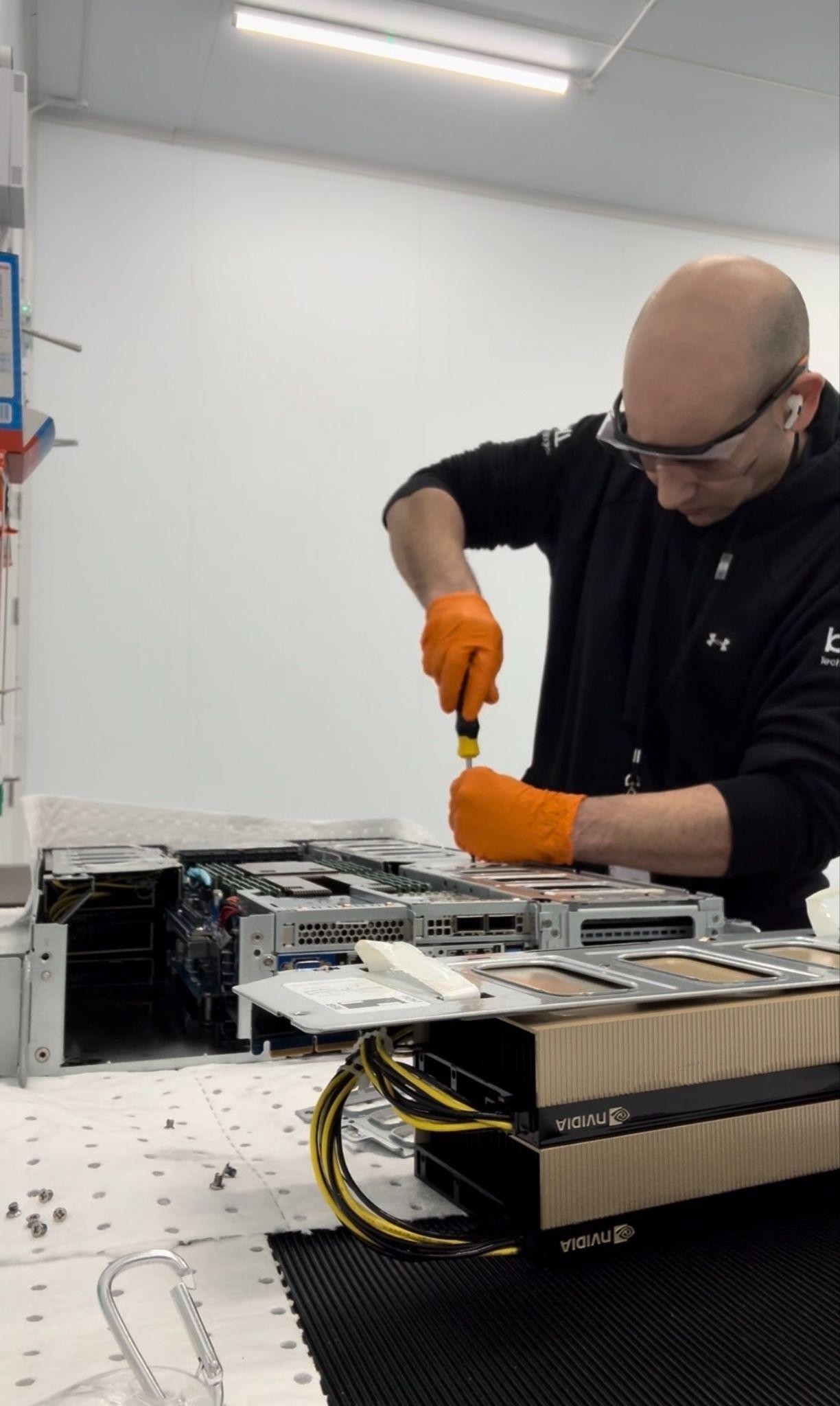
TCO asks the question CapEx cannot answer on its own: what does the infrastructure cost throughout the period you expect to operate it?
A practical model might look like this:
TCO = initial CapEx + electricity + maintenance + fluid management + facility costs + planned refreshes + migration and decommissioning costs
The Open Compute Project's liquid-cooled data centre TCO model applies a similar principle by separating CapEx and OpEx when comparing data-centre power and cooling scenarios rather than assessing cooling hardware in isolation.
In practice, we would not assess cooling TCO from rack count alone. Power draw, expected density, hardware configuration, and future workload growth all affect the infrastructure required.
A useful assessment should answer five practical questions.
Compare equal compute requirements rather than equal rack counts.
If immersion allows the same workload to occupy fewer racks, the reduced physical and supporting infrastructure should form part of the calculation.
Standard enterprise workloads operating at modest density may still work effectively with air cooling.
The case for immersion becomes stronger where AI, GPU, and HPC equipment creates sustained thermal loads that become increasingly difficult to accommodate through conventional airflow.
Do not add immersion equipment to the cost model without reviewing which parts of the conventional cooling environment may no longer be needed at the same scale.
Depending on the facility, that could include:
CRAC or CRAH capacity
chillers or other mechanical cooling plant
server fan energy
hot or cold aisle containment
raised-floor infrastructure
cooling-related electrical capacity
additional data hall floor space
Not every immersion deployment will eliminate all of these components. The aim is to cost the actual proposed design rather than treating immersion as another layer added to an unchanged air-cooled facility.
Use your contracted UK electricity rate, realistic hardware utilisation, and appropriate PUE assumptions.
A theoretical efficiency improvement does not become a financial saving until you convert it into annual kilowatt-hours and pounds.
For AI infrastructure specifically, our analysis of what it actually costs to run an AI model also shows why power consumption needs to be considered alongside the computing hardware itself.
TCO should extend beyond the first installation.
Consider whether future GPU or server generations can be accommodated within the same thermal architecture, whether sufficient cooling capacity remains, and what preparation replacement hardware would require.
Future hardware refreshes matter because changes in rack density or cooling requirements may require further facility work.
Is immersion cooling cheaper than air cooling?
Sometimes, but not automatically.
For lower-density infrastructure that already operates efficiently, moving to immersion may not provide enough operational benefit to justify the additional infrastructure and migration work.
Immersion warrants closer consideration when it can help you:
consolidate high-density compute
reduce cooling overhead
avoid expanding conventional cooling plant
make better use of data hall space
accommodate higher-power hardware
support sustained workloads without spreading them across more racks
There is therefore no defensible rule that says immersion cooling will always reduce costs by a particular percentage.
Its value depends on what you are replacing, the density of the workload, and what the new infrastructure allows you to avoid building.
Building immersion infrastructure versus using colocation
The cost structure also changes if you use immersion-ready colocation instead of building the facility yourself.
Building your own environment means funding tanks, dielectric fluid, pumps, heat exchangers, facility integration, power infrastructure, and specialist engineering capability.
That can make sense where an organisation has the scale, property strategy and internal resources to own and operate the infrastructure over the long term.
For others, using an established immersion-ready colocation environment can move much of that specialist infrastructure expenditure into an operating service.
Carbon-Z operates single-phase immersion infrastructure in the UK, with tanks, dielectric-fluid management, cooling infrastructure, power, and on-site engineering provided as part of the colocation service.
The comparison is not simply CapEx versus OpEx. You also need to consider how quickly capacity is required, how much specialist infrastructure you want to own and maintain, and whether the facility can accommodate future increases in computing density.
If you are assessing high-density AI, GPU or HPC infrastructure, explore our immersion cooling service to see how Carbon-Z supports deployments without requiring every customer to build and operate their own immersion environment.
The real immersion cooling cost is the cost of delivering compute
There is no credible universal pound-per-rack figure for immersion cooling because rack count tells you too little about the workload.
The more useful comparison is the cost of delivering a defined amount of compute at the required density, resilience, and utilisation over several years.
Start with CapEx, but do not stop there.
Model electricity, space, maintenance, fluid management, future hardware requirements, and the infrastructure you may no longer need. Then compare that TCO against realistic alternatives, whether that is air cooling, direct-to-chip cooling, or immersion-ready colocation.
For high-density AI and HPC infrastructure, that calculation can look very different from the upfront price of the cooling equipment alone.
If you need to establish the electrical requirement before comparing your options, you can request a power assessment from Carbon-Z to build the cost discussion around the demands of your actual workload.



%20--%3e%3csvg%20version='1.1'%20id='Layer_1'%20xmlns='http://www.w3.org/2000/svg'%20xmlns:xlink='http://www.w3.org/1999/xlink'%20x='0px'%20y='0px'%20viewBox='0%200%20388.2%20150.6'%20style='enable-background:new%200%200%20388.2%20150.6;'%20xml:space='preserve'%3e%3cstyle%20type='text/css'%3e%20.st0{fill:%2304C7FD;}%20.st1{fill:%230068B5;}%20%3c/style%3e%3crect%20y='2.1'%20class='st0'%20width='28.1'%20height='28.1'/%3e%3cpath%20class='st1'%20d='M27.4,148.5V47.3H0.8v101.2H27.4z%20M204.2,149.5v-24.8c-3.9,0-7.2-0.2-9.6-0.6c-2.8-0.4-4.9-1.4-6.3-2.8%20c-1.4-1.4-2.3-3.4-2.8-6c-0.4-2.5-0.6-5.8-0.6-9.8V70.1h19.3V47.3h-19.3V7.8h-26.7v97.9c0,8.3,0.7,15.3,2.1,20.9%20c1.4,5.5,3.8,10,7.1,13.4s7.7,5.8,13,7.3c5.4,1.5,12.2,2.2,20.3,2.2L204.2,149.5L204.2,149.5z%20M357,148.5V0h-26.7v148.5H357z%20M132.5,57.2c-7.4-8-17.8-12-31-12c-6.4,0-12.2,1.3-17.5,3.9c-5.2,2.6-9.7,6.2-13.2,10.8l-1.5,1.9v-1.7V47.3H43v101.2h26.5V94.6v3.7%20c0-0.6,0-1.2,0-1.8c0.3-9.5,2.6-16.5,7-21c4.7-4.8,10.4-7.2,16.9-7.2c7.7,0,13.6,2.4,17.5,7c3.8,4.6,5.8,11.1,5.8,19.4l0,0v0.2l0,0%20l0,0v53.5h26.9V91C143.7,76.6,139.9,65.2,132.5,57.2z%20M316.5,97.7c0-7.3-1.3-14.1-3.8-20.5c-2.6-6.3-6.2-11.9-10.7-16.7%20c-4.6-4.8-10.1-8.5-16.5-11.2s-13.5-4-21.2-4c-7.3,0-14.2,1.4-20.6,4.1c-6.4,2.8-12,6.5-16.7,11.2s-8.5,10.3-11.2,16.7%20c-2.8,6.4-4.1,13.3-4.1,20.6c0,7.3,1.3,14.2,3.9,20.6c2.6,6.4,6.3,12,10.9,16.7c4.6,4.7,10.3,8.5,16.9,11.2%20c6.6,2.8,13.9,4.2,21.7,4.2c22.6,0,36.6-10.3,45-19.9l-19.2-14.6c-4,4.8-13.6,11.3-25.6,11.3c-7.5,0-13.7-1.7-18.4-5.2%20c-4.7-3.4-7.9-8.2-9.6-14.1l-0.3-0.9h79.5L316.5,97.7L316.5,97.7z%20M237.2,88.4c0-7.4,8.5-20.3,26.8-20.4c18.3,0,26.9,12.9,26.9,20.3%20L237.2,88.4z'/%3e%3cpath%20class='st1'%20d='M387.4,135.3c-0.5-1.2-1.2-2.2-2.1-3.1c-0.9-0.9-1.9-1.6-3.1-2.1s-2.5-0.8-3.8-0.8c-1.4,0-2.6,0.3-3.8,0.8%20c-1.2,0.5-2.2,1.2-3.1,2.1c-0.9,0.9-1.6,1.9-2.1,3.1c-0.5,1.2-0.8,2.5-0.8,3.8c0,1.4,0.3,2.6,0.8,3.8s1.2,2.2,2.1,3.1%20c0.9,0.9,1.9,1.6,3.1,2.1s2.5,0.8,3.8,0.8c1.4,0,2.6-0.3,3.8-0.8c1.2-0.5,2.2-1.2,3.1-2.1c0.9-0.9,1.6-1.9,2.1-3.1%20c0.5-1.2,0.8-2.5,0.8-3.8S387.9,136.5,387.4,135.3z%20M385.8,142.3c-0.4,1-1,1.9-1.7,2.6c-0.7,0.7-1.6,1.3-2.6,1.7s-2,0.6-3.2,0.6%20c-1.1,0-2.2-0.2-3.2-0.6c-1-0.4-1.9-1-2.6-1.7s-1.3-1.6-1.7-2.6c-0.4-1-0.6-2-0.6-3.2c0-1.1,0.2-2.2,0.6-3.2s1-1.9,1.7-2.6%20c0.7-0.7,1.6-1.3,2.6-1.7s2-0.6,3.2-0.6c1.1,0,2.2,0.2,3.2,0.6c1,0.4,1.9,1,2.6,1.7s1.3,1.6,1.7,2.6c0.4,1,0.6,2,0.6,3.2%20C386.5,140.3,386.2,141.3,385.8,142.3z%20M380.2,139.9c0.8-0.1,1.4-0.4,1.9-0.9s0.8-1.2,0.8-2.2c0-1.1-0.3-1.9-1-2.5%20c-0.6-0.6-1.7-0.9-3-0.9h-4.4v11.3h2.1v-4.6h1.5l2.8,4.6h2.2L380.2,139.9z%20M379.1,138.3c-0.3,0-0.6,0-1,0h-1.5v-3.2h1.5%20c0.3,0,0.6,0,1,0c0.3,0,0.6,0.1,0.9,0.2c0.3,0.1,0.5,0.3,0.6,0.5s0.2,0.5,0.2,0.9s-0.1,0.7-0.2,0.9c-0.2,0.2-0.4,0.4-0.6,0.5%20C379.7,138.2,379.4,138.3,379.1,138.3z'/%3e%3c/svg%3e)